Embodied Technofeminism
Eda Er’s artistic research asks how bodies, materials, and culturally transmitted forms of knowledge can enter technological systems without being flattened into information. She describes this field of inquiry as embodied technofeminism. The name carries a lineage: cyberfeminism imagined technology freeing the body by making it virtual; technofeminism, after Judy Wajcman, asked how gender and technology shape each other; new-materialist thought treats bodies, matter, and machines as inseparable. This work takes the last step literally and stays with matter.
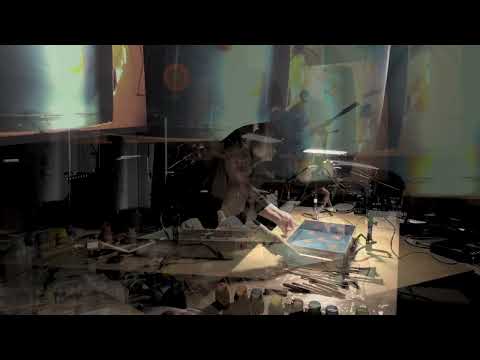
Where technologies are often imagined as extensions of human control, Er builds systems around listening, instability, reciprocity, resistance, and transformation. The instrument is not simply a device operated by a performer but a relationship between body, material, memory, machine, and environment. Gesture, breath, voice, water, pigment, and surface carry forms of knowledge that are not reducible to notation or data; her research begins from the proposition that these forms of embodied knowledge can themselves generate technological and compositional structures. The question is not only how technology can represent the body. It is how technology might be changed by encountering it.
Feminist Instrument Design
Within this broader practice, Er develops a methodology of feminist instrument design. Instrument design is treated as both a compositional and a political act. Every instrument distributes agency: it determines which gestures become meaningful, which kinds of virtuosity are rewarded, how performer and system interact, and which forms of knowledge can become audible. Augmented instruments become sites of feminist practice: rather than increasing control, precision, or efficiency, they may listen, resist, transform, remember, or remain partly unpredictable, and material behaviour participates in musical form.
The approach draws on new media studies, postcolonial thought, embodied knowledge, and the philosophy of technology, and stays grounded in artistic practice. It asks how traditions peripheral to Western concert music can function not as references or decoration but as foundations for new compositional systems, and what new forms of authorship become possible when the instrument itself is built from them.
Methodologically, she develops compositional systems grounded in material process — water, pigment, breath, surface — and translates these into notational frameworks, live electronics, and spatial audio structures. Extended vocal techniques, multichannel diffusion, and real-time computer vision form the technical substrate of her practice, always in service of a deeper inquiry into embodiment, rupture, and cultural transmission.