← Home

About

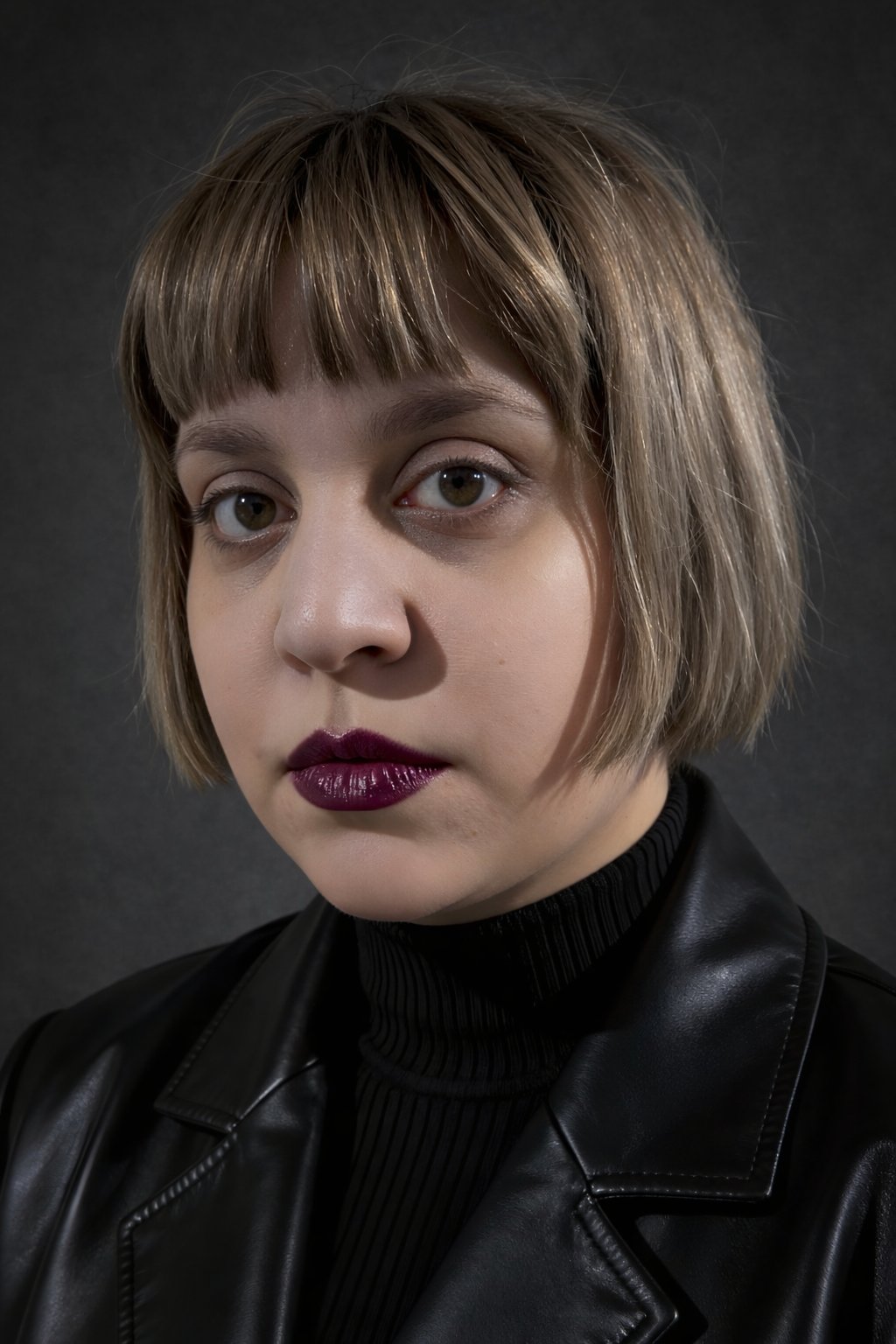
Eda Er is a composer, new media artist, and vocalist working across composition, performance, live electronics, audiovisual media, and responsive instrument design. Her work creates situations in which bodies, materials, and technological systems listen and respond to one another. Voice becomes physical material; gesture becomes sound and image; water, pigment, objects, and surfaces become instruments. She has rebuilt the Turkish marbling tray as a live augmented instrument, and performs it herself.

She describes this territory as embodied technofeminism: an artistic practice concerned with how bodies and culturally situated forms of knowledge can inhabit technology without being neutralized by it.

Eda Er composes works in which storytelling operates as structure rather than representation. Sound does not accompany a narrative from the outside; memory, rupture, gesture, repetition, and transformation determine how the work itself unfolds. Her performances often place the body inside a responsive system: extended voice, live electronics, movement, visual media, and material processes become interdependent, and the boundary between performer, instrument, and environment is deliberately unstable.

Central to this practice is a question: what might an instrument become if its technological logic were feminist?

Rather than treating technology as a neutral tool, Er approaches instrument-making as a cultural and political act. Who is allowed to compose? What is recognized as notation? Which forms of bodily and inherited knowledge enter the concert space, and which have been excluded from it? Her work draws on feminist new media studies, postcolonial inquiry, and embodied approaches to technology. Practices that have existed outside the dominant histories of Western concert music become generative structures for new instruments, scores, and forms of authorship.

Grief, diaspora, cultural memory, and generational silence recur throughout the work, not as themes but as compositional forces. Technology, in this practice, becomes an instrument of reclamation rather than erasure.

Across her work, storytelling is not representation but architecture — an active force that gives sound its shape.
Her current research develops what she calls feminist instrument design: responsive instruments that reorganize the relationships between body, material, technology, and audience.

Her doctoral project, Fluid Narratives, rebuilds Turkish marbling (ebru) as a live augmented instrument for sound, image, and movement: a tray of water, pigment, contact microphones, transducers, and computer vision through which a single gesture produces sound and image at once.

Rather than translating material into data and leaving the material behind, the work asks how technology might remain accountable to the physical knowledge from which that data emerges. Water resists. Pigment disperses. Breath changes. Gesture leaves traces. The instrument begins there.

Historically, ebru entered the record largely through male masters and male master-apprentice lineages. Contemporary practice has shifted dramatically: women now constitute a major, and by some accounts dominant, presence in the field. Fluid Narratives begins from this tension between who practices a cultural form, who becomes visible as its authority, and whose ways of knowing enter its history. The project’s feminist archive, interviews recorded in 2024 with ten women marblers in Istanbul, records that presence in their own words alongside the instrument and its notation of sixteen gestures.

Fluid Narratives →

Eda Er’s work has been recognized with a series of competitive awards at UC Berkeley and beyond. She is the 2025–26 George Ladd Prix de Paris Fellow — the fellowship granted to one graduate composer each year for full-time artistic and scholarly research in Paris — and has been selected, for 2026–27, as a Berkeley Connect Fellow from a highly competitive pool.

Her research and composition have received the Peter Lyman Graduate Fellowship in New Media (2025) from the Berkeley Center for New Media, the Nicholas C. Christofilos, Jr. Memorial Prize in Music (2025), the Nicola de Lorenzo Prize in Music Composition — twice, in 2024 and 2025 — and the Emerging Composition Completion Grant from the ARTZenter Institute for orchestral work (2023), alongside research and dissertation support from BCNM and the UC Berkeley Graduate Division. In summer 2025 she held a paid fellowship in the Universal Design for Learning (UDL) Working Group of the GSI Teaching and Resource Center, redesigning her course New Media 90 on UDL principles.

Her work has been performed internationally by ensembles and institutions including the Antwerp Symphony Orchestra, Ensemble Multilatérale, San Francisco Contemporary Music Players, Ensemble Musikfabrik, and the Nordic Trombone Quartet.

Eda Er is currently completing her PhD in Music Composition with a Designated Emphasis in New Media at the University of California, Berkeley (CNMAT / BCNM), where she has taught music production, electronic composition, and sound design since 2022. She is active as both a composer and performer in Europe and the United States.

She also performs as ΞDΛ, an experimental dark-pop project that carries her compositional practice into electronic, club-adjacent audiovisual performance.

Based between the San Francisco Bay Area, US, and Strasbourg, France.